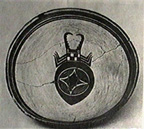
Figure 1. Mimbres bowl with antlion illustration. From the permanent collection of the
Maxwell Museum of Anthropology, University of New Mexico (Albuquerque).
Photo by Fred Stimson.
The Mimbres people were prehistoric Native Americans who lived from around C.E.
200 to 1350 in what is now southwestern New Mexico. They are especially known
for their figurative ceramic pottery designs. One such design is a highly-stylized
illustration of an antlion larva on a bowl (Figure 1).
Found at the Pruitt site in the Mimbres Valley, the bowl is painted in the Classic Black-on-White style.
Prehistoric Native American cultures, including the Mimbres, are known to have used psychoactive plants and other trance-inducing mechanisms for spiritual, healing and recreational needs. According to some experts, the checker board and whirling vortex designs in Mimbres antlion bowls are probably hallucinogenically inspired (Cox 1997).
In addition to antlions and other insects, Mimbres figurative pottery depicted amphibians, reptiles, mammals, birds, and human forms (Brody 1977). Not all Mimbres representational paintings were of realistic scenes. Some portrayed mammals with fish-tails, bird-wings, and human-like heads. Important insight into Mimbres art has been provided by the Hopi, a modern day Puebloan people. The Hopi have interpreted many scenes as showing how the lives of man and animal were intertwined; the symbiotic rather than the adversarial aspect of the relationship is stressed (LeBlanc 1983, 120).
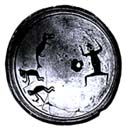
Figure 2. Mimbres bowl with scene of
"animal-to-human transformation."
Several Mimbres bowls depict what appear to be scenes of animal-to-human transformation (Figure 2), a concept consistent with Puebloan cosmology. Interpretations of this kind, combined with the depiction of mythic creatures and imaginary scenes, suggest that some Mimbres figurative bowls were used to portray religious events and symbolism (LeBlanc 1983, 137).
Mimbres bowls are perhaps the most widely known prehistoric art form from the United States. But this fame has been a mixed blessing for the archaeology of the Mimbres area: looters and pot hunters have been responsible for the wholesale destruction of many sites. To attempt to stem the destruction, the Mimbres Foundation was formed in 1974, largely through private contributions of the local arts community (Anyon and LeBlanc 1984; LeBlanc 1983).
Anyon, Roger, and Steven LeBlanc. 1984. The Galaz ruin: a prehistoric Mimbres village in southwestern New Mexico. Albuquerque: Maxwell Museum of Anthropology, Univ. of New Mexico Press.
Brody, J. J. 1977. Mimbres painted pottery. Santa Fe: School of American Research.
Brody, J. J. 1983. Mimbres pottery: ancient art of the American Southwest. New York: Hudson Hills Press.
Cox, Robert. 1997. "Entheogenic Tradition of the Mogollon Mimbres." Original site no longer available. Accessed via Wayback Machine: http://web.archive.org/web/20041217235531/www.mimbres.com/Entheo/blcon.htm.
LeBlanc, Steven A. 1983. The Mimbres people: ancient Pueblo painters of the American Southwest. New York: Thames and Hudson.
Lekson, Stephen H. 1990. Mimbres archaeology of the Upper Gila, New Mexico. Tucson: Univ. of Arizona Press.





 ) (Entomology Department, Univ. of Florida, USA). Article from the Winter 1993 issue of American Entomologist.
 Go to next topic: Antlion sculptures by Patrick Bremer
 :
: